GEO (Generative Engine Optimization): How to Get Your Content Cited by AI Search in 2026
TL;DR — A practical 2026 guide to Generative Engine Optimization—how to structure content so Google AI Overviews, Perplexity, and ChatGPT Search cite it, with copy-paste audit and rewrite prompts.
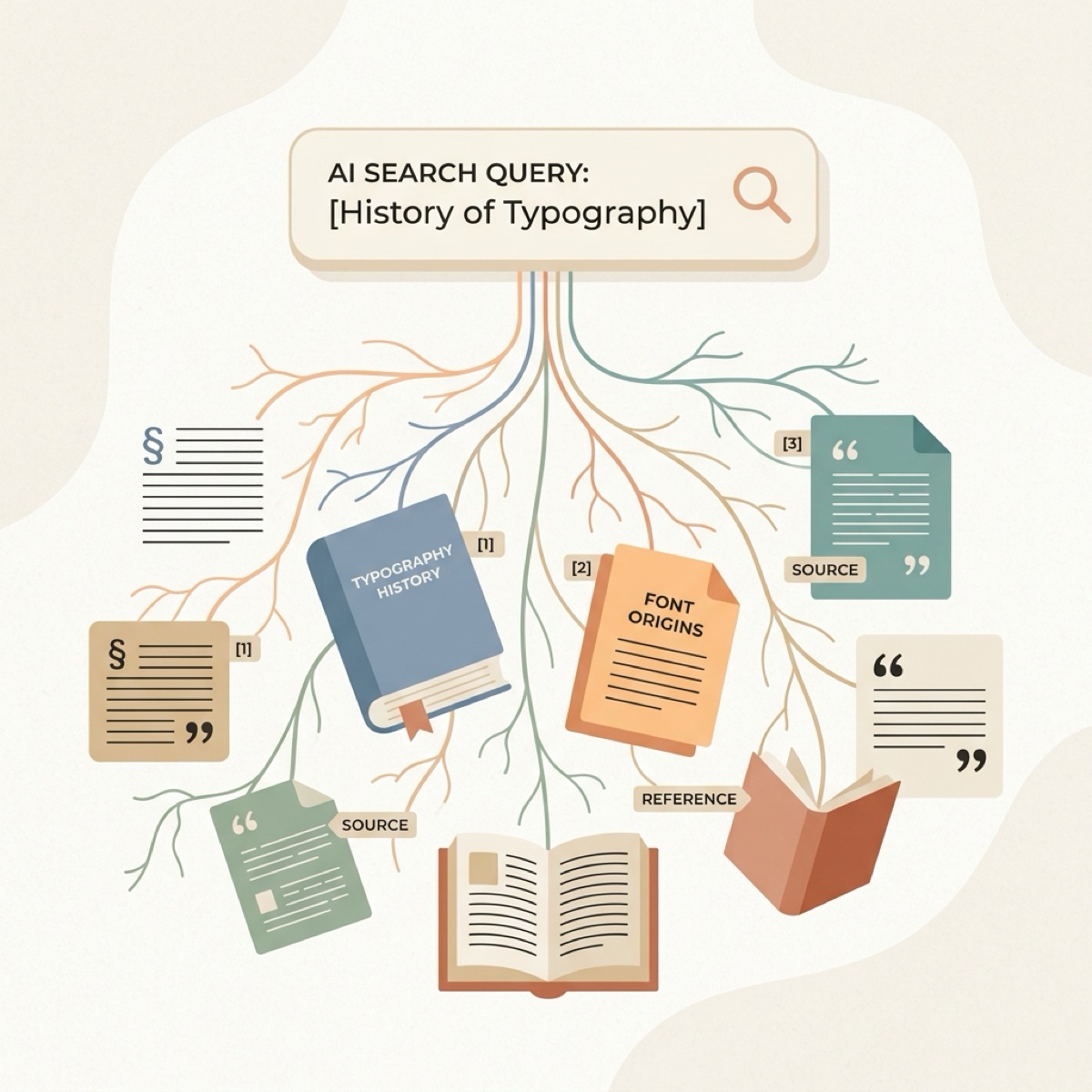
For two decades, the goal of online content was simple: rank high enough on Google that people click your link. That model is quietly being replaced. When someone asks Google AI Overviews, Perplexity, or ChatGPT Search a question today, they often get a synthesized answer with a handful of cited sources—and never click through to the underlying pages at all. The new question isn't "Will I rank?" It's "Will I be one of the sources the AI quotes?"
That shift is what Generative Engine Optimization (GEO) addresses. GEO is the practice of structuring and writing content so that generative AI search engines extract, trust, and cite it inside their answers. It doesn't replace traditional SEO—you still need to be crawlable, fast, and authoritative—but it adds a layer of optimization aimed at machines that summarize rather than just rank.
Why does this matter now? According to analysis cited by GEO firm Brandlight, the overlap between the top Google links and the sources AI engines actually cite has reportedly dropped from around 70% to below 20%, and the gap appears to be widening as each AI system develops its own retrieval preferences. In other words, ranking #1 on classic Google no longer guarantees you'll be the page an AI quotes. This guide explains the core mechanics and gives you copy-paste prompts to audit and rewrite your own content.
What GEO Actually Optimizes For
Traditional SEO optimizes for a ranking algorithm that orders a list of links. GEO optimizes for a different pipeline: an AI engine retrieves candidate passages, evaluates which ones cleanly answer the user's question, and then synthesizes an answer while attributing specific claims to specific sources.
The practical implication is that AI engines don't cite pages—they cite passages. A 3,000-word article can be invisible to an AI engine if none of its individual sentences are self-contained and directly answer a question. Conversely, a modest page with a few crisp, quotable, well-sourced statements can get cited repeatedly.
Independent GEO research (popularized in a widely referenced 2023–2024 study and echoed across 2026 industry guides) found measurable visibility gains from specific tactics. The reported figures—roughly +41% from adding quotations, +32% from statistics, +30% from citing sources, and +28% from fluency/clarity improvements—should be treated as directional rather than precise universal laws, but they all point the same way: AI engines favor content that reads like evidence, not like marketing copy.
So GEO comes down to four things AI engines reward:
- Extractability — sentences that stand alone and answer a question without surrounding context.
- Verifiability — claims backed by named statistics, dates, and cited sources.
- Clarity of entities — unambiguous naming of the topic, brand, product, or concept.
- Machine-readable structure — clean headings, Q&A blocks, and where appropriate, structured data.
Answer-First Structure: The Core Habit
The single highest-leverage change is moving to an answer-first structure. AI engines that retrieve content in real time tend to weigh a page's opening content heavily; a common industry guideline is that the first ~200 words should directly and completely answer the primary query before you add nuance.
The classic SEO instinct—open with a story, build suspense, deliver the answer in paragraph six—is actively harmful for GEO. The fix is to lead with the answer, then expand.
A reliable structural pattern for any section:
- Direct answer (1–2 sentences, self-contained).
- Supporting evidence (a statistic, an example, or a cited source).
- Nuance or caveats (when it doesn't apply).
Heading hierarchy matters too. Phrase H2/H3 headings as the actual questions users ask ("How does GEO differ from SEO?") rather than clever labels ("The New Frontier"). The heading itself becomes a retrieval signal.
A small but powerful technique is the definition block: when you introduce a key term, define it in one clean sentence that could be lifted verbatim. "Generative Engine Optimization (GEO) is the practice of structuring content so that AI search engines cite it in their generated answers." That sentence is engineered to be extracted.
Q&A Blocks and Structured Data
AI answer engines natively think in question → answer pairs, so content already shaped that way removes interpretive work from the model. Well-built FAQ sections—a clear question as a heading, followed by a complete, standalone answer—are among the most consistently citable formats.
A note on schema, because the situation changed: Google deprecated FAQ rich results (the expandable snippets in classic search) for most sites. That has led some people to abandon FAQ schema entirely. But for GEO that's the wrong takeaway. The visual rich result going away does not mean the structured data stops helping machines parse your Q&A content. Several 2026 analyses report that pages using FAQPage schema still appear in AI answer surfaces noticeably more often than unstructured prose—one figure cited is roughly 3.2× more likely to appear in Google AI Overviews. Treat that multiplier as a vendor-reported estimate, not a guarantee, but the underlying logic is sound: explicit structure lowers the AI's uncertainty about what is a question and what is its answer.
Practical structured-data priorities for 2026:
| Schema type | Why it helps GEO |
|---|---|
FAQPage |
Maps clean Q&A pairs the AI can extract directly |
Article / BlogPosting |
Establishes author, publish/update dates, and topic |
Organization / Person |
Clarifies the entity behind the content (E-E-A-T) |
HowTo (where genuinely applicable) |
Steps are easy to summarize and cite |
Also handle the unglamorous technical basics first: confirm your robots.txt doesn't block AI crawlers (such as GPTBot, PerplexityBot, Google-Extended), make sure key content is server-side rendered rather than hidden behind client-side JavaScript, and keep important answers out from behind logins or paywalls. If an engine can't fetch the passage, none of the writing tactics matter.
Copy-Paste Prompts: Audit and Restructure
Here are three prompts you can paste into any capable LLM (Claude, ChatGPT, Gemini) to apply GEO to your own work. If you write for global audiences, these pair well with our guide to Korean business AI writing prompts for adapting tone across markets.
Prompt 1 — Citation-worthiness audit. Use this to find out whether an AI engine could even cite your article.
You are a GEO (Generative Engine Optimization) auditor. I will paste an
article. Evaluate ONLY how citable it is for AI search engines (Google AI
Overviews, Perplexity, ChatGPT Search).

Score each criterion 0-5 and give one concrete fix per criterion:
1. Answer-first: Do the first 150-200 words directly answer the main query?
2. Extractable sentences: How many sentences are self-contained enough to
   quote out of context? List the 3 most quotable and the 3 weakest.
3. Evidence: Are there specific statistics, dates, and named sources?
4. Entity clarity: Is the main topic/brand named unambiguously and early?
5. Structure: Are headings phrased as real questions? Is there a Q&A block?

End with: (a) an overall citability score /25, and (b) the single highest-
impact change to make first.

ARTICLE:
"""
[paste your article here]
"""
Prompt 2 — Answer-first rewrite. Use this to restructure a buried answer.
Rewrite the section below into an answer-first structure for AI search.
Rules:
- Open with a 1-2 sentence direct answer that stands alone with no prior
  context (assume it may be quoted in isolation).
- Follow with one supporting statistic, example, or cited source.
- Then add nuance/caveats.
- Keep my facts; do NOT invent statistics or sources. If a claim needs a
  source I haven't given, flag it as [SOURCE NEEDED] instead of fabricating.
- Preserve my voice; don't make it robotic.

SECTION:
"""
[paste the section]
"""
Prompt 3 — Generate a citable Q&A block. Use this to add an extractable FAQ.
From the article below, generate 5 FAQ pairs optimized for AI citation.
For each:
- Question = a real, natural query a user would type.
- Answer = 2-4 sentences, fully self-contained, factually grounded ONLY in
  the article (no new claims). Front-load the direct answer in sentence one.
Then output the same 5 pairs as valid FAQPage JSON-LD schema.

ARTICLE:
"""
[paste your article]
"""
For richer formats—video scripts, tutorials, multimodal content—the same answer-first discipline applies; see our AI video prompts guide for how to keep spoken and on-screen text equally extractable.
Common Mistakes to Avoid
Even teams that understand GEO tend to trip on the same things:
- Fabricating statistics to look "citable." AI engines (and your readers) increasingly cross-check. Inventing numbers is both an E-E-A-T failure and, for ad-monetized sites, a policy risk. Cite real, verifiable sources and link them.
- Burying the answer. A great answer in paragraph seven is, for retrieval purposes, often no answer at all.
- Vague entity references. Writing "this tool" or "the platform" instead of naming it leaves the AI guessing about what your page is actually about.
- Walls of unbroken prose. Long paragraphs that mix three ideas can't be cleanly extracted. Favor focused paragraphs and lists.
- Treating GEO as a replacement for SEO. It's a complement. Crawlability, page speed, internal linking, and genuine authority still feed both systems.
- Chasing every reported multiplier as gospel. Many GEO statistics circulating in 2026 come from vendors with a product to sell. Use them as direction, test on your own pages, and measure with AI-referral analytics rather than assuming.
- Over-optimizing into stiffness. Clarity gains are real, but content that reads like it was built only for machines loses the trust signals (genuine expertise, specifics, voice) that both humans and AI reward.
Measuring Whether It's Working
GEO results are harder to see than SEO rankings because there's no public "AI ranking" dashboard. Practical signals to track as of 2026:
- AI-referral traffic in your analytics (sessions from chatgpt.com, perplexity.ai, gemini, etc.). Some teams reported large jumps in AI-referred sessions through 2025; your mileage will vary, so watch your own trend, not the headline.
- Manual citation checks: periodically ask the major engines your target questions and note whether you're cited.
- Branded vs. unbranded mentions: whether the AI names you as a source when the query doesn't mention you.
Expect a lag. Engines re-crawl and re-evaluate on their own schedules, so treat GEO like SEO: a compounding investment, not an overnight switch.
Conclusion and Next Steps
Search is shifting from "rank a link, earn a click" to "earn a citation inside an answer," and GEO is how content adapts. The good news is that the tactics aren't exotic: lead with the answer, write sentences that stand alone, back claims with real statistics and named sources, name your entities clearly, and add machine-readable structure like clean Q&A blocks and FAQPage schema. None of that conflicts with good SEO or good writing—it's largely what genuinely helpful, trustworthy content has always done, made explicit for machines that summarize.
If you do one thing this week, run Prompt 1 against your highest-traffic article to get an honest citability score, then use Prompt 2 to fix the single weakest section it flags. Next, add a five-question FAQ block with Prompt 3 and ship the schema. Re-check your AI-referral analytics in a few weeks, repeat on your next page, and keep your standards honest: cite real sources, hedge what's uncertain, and never invent a number to sound more quotable. In an AI-mediated web, the most durable optimization is still being a source worth trusting.